| |
 mouse over to magnify 
| | | | 231 Savu Group, Savu
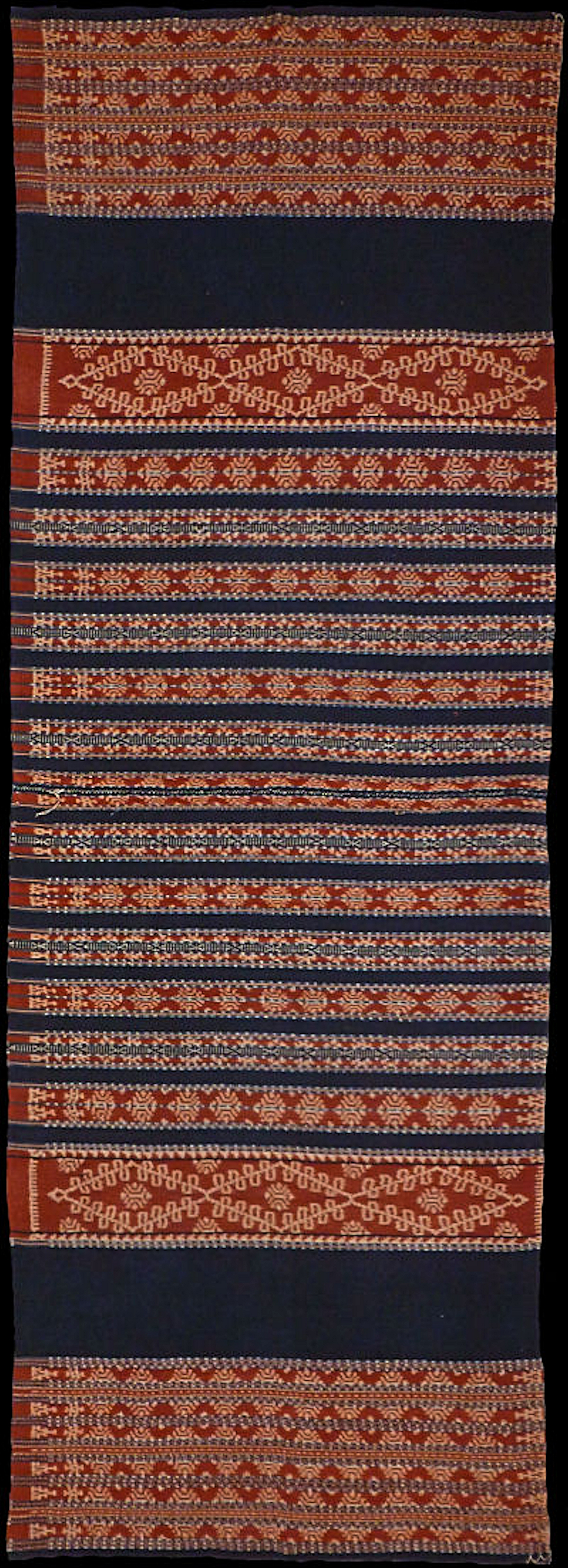
Ei (sarong)
| | Locale: | Hubi Iki, probably wini Jawu. | | Period: | 1940-1950 | | Panels: | 2 | | Design: | Motif of the widest ikat band, hebe, is called wokelaku. The blue edges of the seam, béka, mark this sarong as belonging to the moiety Hubi Iki. Narrow stripes decorated in supplementary warp. | | Size: | 60 x 172 cm (23.6 x 67.7 in) | | Weight: | 525 g (254 g/m2) | | Yarn: | Cotton, commercial, fine, double-ply | | Comment: | [PHOTOGRAPHY PROVISIONAL] Excellent example of the type with clear, tight ikat and good colour saturation. Very well preserved. The sarong is marked with a little zigzag in white thread, bunga wurumada, signalling completion of the ceremony required after the weaving and before sewing the cloth into a sarong. Indigo weft. | | Background: | Additional information in chapters on Savu Group and Savu. | | Compare: | 010 026 136 144 145 | | Sources: | Near-identical example in Duggan's contribution to La Fibre des Ancêtres, Fig. 12, which was made in Loko Joba, Mesara district. Also near-identical (but with the red seam edges of hubi ae) in Duggan, Woven Stories,, p. 11; and to ei worn by a woman on a photo by Duggan depicted in Breguet, From Cotton to Cloth, p. 158. | | |
 ©Peter ten Hoopen, 2026
All rights reserved.
|
|

 ONLINE MUSEUM OF INDONESIAN IKAT TEXTILES
CURATOR: Dr PETER TEN HOOPEN BROWSE FROM:
[RANDOM] [001] [050] [100] [150] [200] [250] [300] [350] [375]